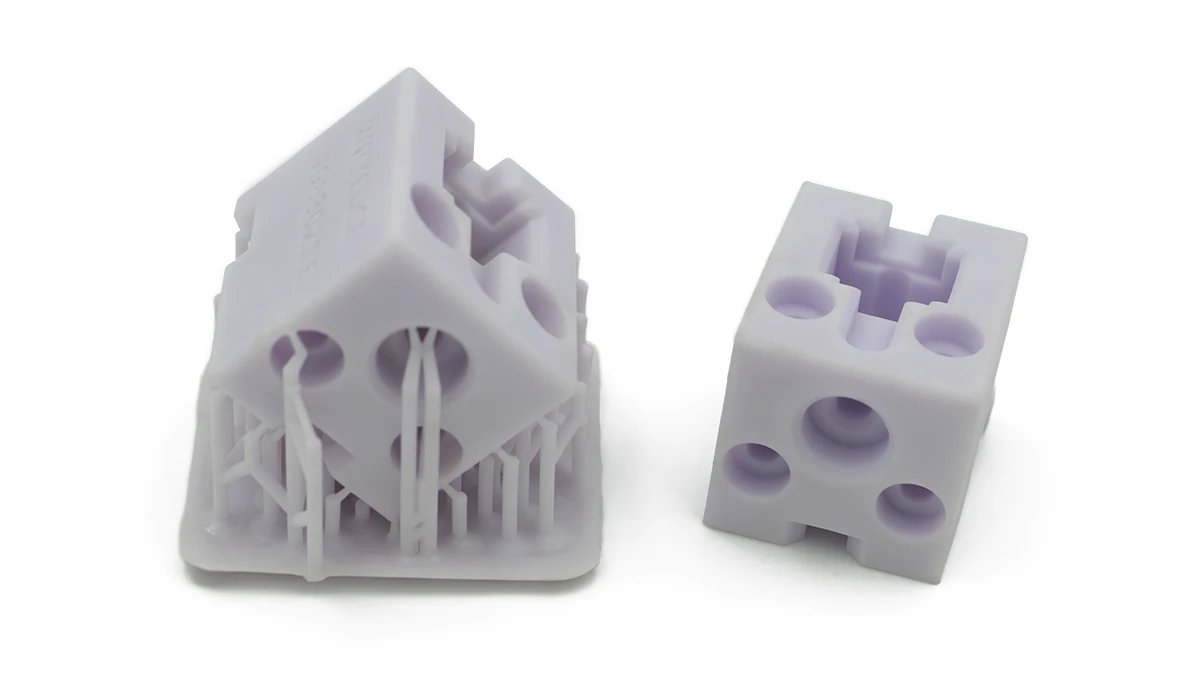
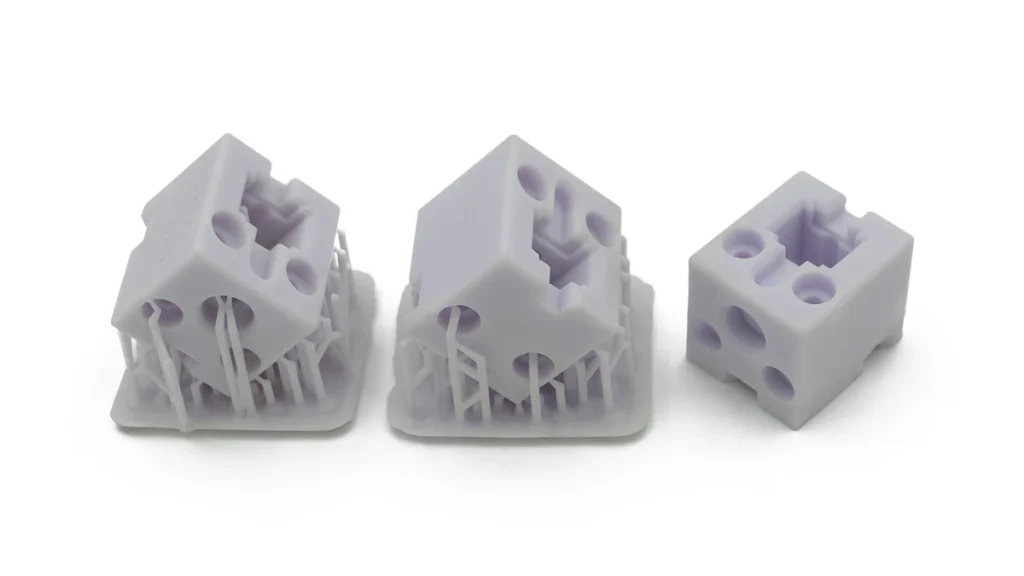
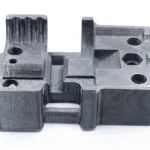
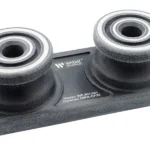
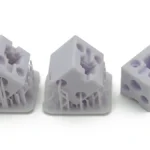
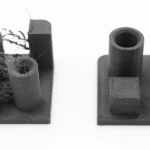
This MSLA support removal example demonstrates the final stage of the resin 3D printing process – support removal. The part was printed using EM-S-AC10 rigid engineering resin and shows how temporary support structures help create complex geometries that would be difficult to manufacture using traditional methods.
Unlike FDM printing, MSLA technology uses photopolymer resin cured layer by layer with UV light. Support structures are required during printing but are removed after post-processing, leaving the final functional component.
MSLA support removal example using EM-S-AC10 rigid engineering resin. The image shows the printed component before and after support removal, demonstrating how temporary support structures enable complex geometries and precision features. (WRYEDGE test project)
During the printing process, each new layer must be mechanically supported. Features such as overhangs, holes, cavities, and sharp edges often require additional support structures to prevent deformation or print failure.
In this example, the supports hold the component securely during printing and are removed after curing. Benefits of support structures:
Many resin users remove supports before the final UV curing stage. At this point, the printed component is still slightly flexible, allowing support structures to be detached more cleanly and with a lower risk of surface damage.
Once fully cured, engineering resins become significantly harder and more brittle. Removing supports after full curing may increase the likelihood of visible marks, chipped edges, or damage to delicate features.
For MSLA resin prints, support removal is usually easier before the final UV curing stage, while the part is still slightly flexible after washing. The printed model should first be washed to remove uncured resin, then supports can be carefully removed using flush cutters, tweezers, or a scalpel.
Slightly warming the part in warm water, around 40–50 °C, can make supports softer and reduce the risk of breaking small features. Ultrasonic cleaning can help remove uncured resin from cavities and fine details, but it should be used carefully and not for too long, especially with thin or delicate parts. After the supports are removed, the part can be fully UV cured to reach its final rigidity and mechanical properties.
Recommended support removal workflow:
• Remove the printed part from the build platform.
• Wash the part to remove uncured resin.
• If needed, warm the part in 40–50 °C water to soften the support contact points.
• Remove supports carefully using flush cutters, tweezers, or a scalpel.
• Clean small support marks with fine sanding tools if required.
• Perform final UV curing only after the supports have been removed.
• Inspect the final part for small marks, cracks, or remaining resin inside holes and cavities.
To keep the comparison fair, both samples were printed using the same slicer profile and identical print settings. The only intentional difference between the two samples was the drying process.
| Parameter | Value |
|---|---|
| Technology | MSLA |
| Material | EM-S-AC10 |
| Material type | Rigid engineering resin |
| Layer height | 0.05 mm |
| Post-processing | Washing + UV curing |
| Supports | Required |
| Surface finish | Smooth |
| Application | Precision engineering part |
These settings were used for manufacturing the EM-S-AC10 engineering resin component shown in this real-world MSLA printing example.
In this test, support removal was performed before final UV curing. The EM-S-AC10 resin remained sufficiently rigid to maintain dimensional accuracy while still being flexible enough to reduce the risk of chipping at support contact points.
The final component showed clean edges, smooth surfaces, and no visible deformation after support removal and final curing.
The component was manufactured using MSLA resin printing technology and EM-S-AC10 rigid engineering resin. The support structures visible during printing are intentionally generated to stabilize the geometry and ensure dimensional accuracy. After washing and support removal, the final component demonstrates the high level of detail achievable with engineering-grade resin materials.
This simple example demonstrates an important aspect of resin 3D printing. While support structures may appear complex during manufacturing, they are only temporary. Once removed, the final component retains excellent dimensional accuracy, fine details, and a clean surface finish.
For precision engineering components, MSLA printing combined with rigid materials such as EM-S-AC10 provides an efficient way to manufacture complex geometries with minimal post-processing.
MSLA support removal test: before and after support removal MSLA resin post-processing example using EM-S-AC10 engineering resin This MSLA support
9:00 – 18:00 on workdays.
Weekends – available upon request.
Do you have questions, or need a consultation about 3D printing technologies and production? Order form!
We are always happy to welcome visitors — just arrange your visit in advance. During your visit, you can explore our equipment, materials, and real production processes.
© 2026 WRYEDGE | All right reserved