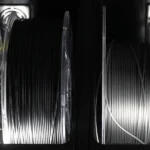
Same material. Same settings. Completely different result — caused only by moisture.
This PA6-CF15 drying test demonstrates how moisture directly affects 3D print quality in carbon fiber reinforced nylon. PA6-CF15 is a nylon-based carbon fiber reinforced material, and moisture has a direct impact on print quality. Even when the material comes from a sealed vacuum package, it can still contain enough moisture to affect extrusion, surface finish, and layer consistency.
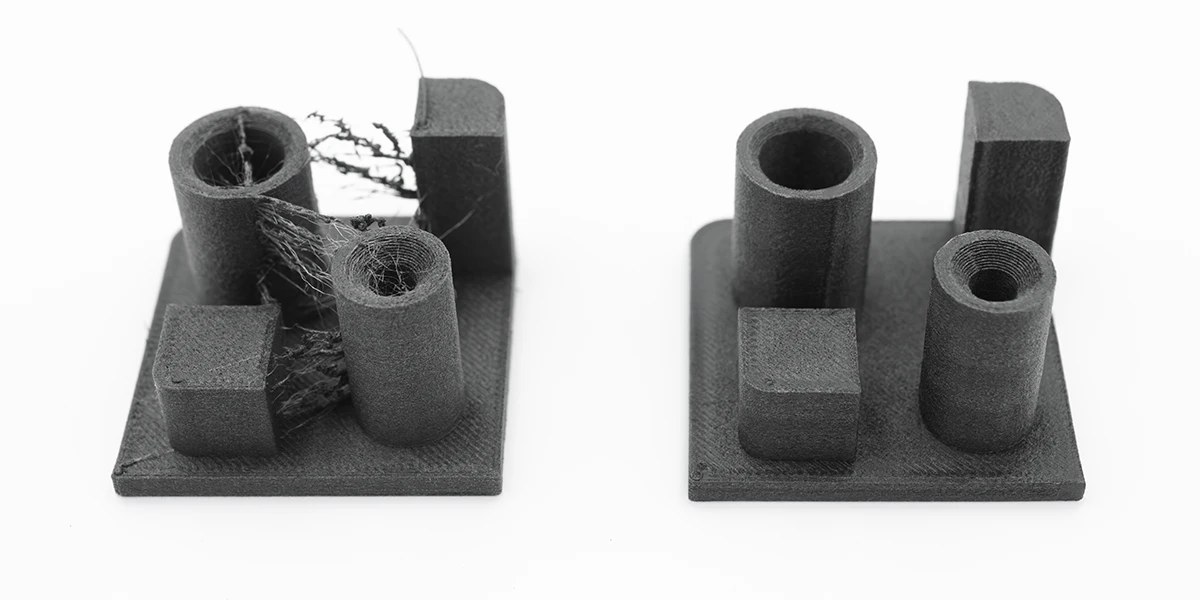
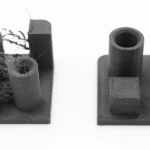
In this real print test, the left sample was printed straight from the vacuum package, while the right sample was printed after drying for 12 hours at 70°C.
• Left sample: printed straight from vacuum packaging.
• Right sample: dried for 12 hours at 70°C.
• Main difference: moisture content.
• Result: drying significantly improved surface quality and extrusion stability.
Key takeaway
PA6-CF15 MUST be dried.
Even vacuum-packed material is not dry enough.
Drying = better surface quality and stronger parts.
Real-world PA6-CF15 moisture test in FDM 3D printing conditions. Left: material printed directly from vacuum packaging without drying. Right: the same material dried for 12 hours at 70°C. The comparison clearly shows 3D print quality – the impact of moisture on stringing, surface quality, and extrusion consistency. (WRYEDGE test)
What actually happens when PA6-CF absorbs moisture?
The left sample clearly shows the effects of moisture during printing. As moisture evaporates during extrusion, it can cause inconsistent flow, stringing, and rough surface texture. This results in:
• Visible stringing and fibers between features.
• Rough, grainy surface finish.
• Reduced dimensional accuracy.
• Weaker layer bonding.
After drying: what changed?
After drying the material for 12 hours at 70°C, the print becomes significantly more stable. The right sample shows:
• Clean geometry with no filament stringing.
• Consistent extrusion.
• Smooth, uniform surface.
• Improved layer adhesion.
3D printing settings used in this test
To keep the comparison fair, both samples were printed using the same slicer profile and identical print settings. The only intentional difference between the two samples was the drying process.
Parameter
Value
Material
PA6-CF15
Nozzle temperature
255°C
Bed temperature
85°C
Nozzle type
Hardened steel
Flow ratio
0.85
Pressure advance
0.02
Max volumetric speed
24 mm³/s
Cooling
10–30% (minimal cooling)
Drying
70°C for 12 hours (right sample only)
Both samples were printed using identical settings. The only variable changed was the drying process, making the results directly comparable.
Conclusion
Even when PA6-CF15 comes from a sealed vacuum package, drying is still critical. For engineering-grade parts, skipping drying can directly lead to poor surface quality, dimensional instability, and unreliable mechanical performance.
We are always happy to welcome visitors — just arrange your visit in advance. During your visit, you can explore our equipment, materials, and real production processes.