PPS vs PPS-CF is one of the less common but highly relevant comparisons in high-performance 3D printing materials. While materials like PLA or PETG dominate entry-level printing, polyphenylene sulfide (PPS) belongs to a completely different class of engineering polymers designed for extreme environments. PPS is known for its exceptional resistance to heat, chemicals, and flame. When reinforced with carbon fiber (PPS-CF), the material gains additional stiffness and structural strength, making it suitable for demanding industrial applications.
This article explores the key differences between PPS and PPS-CF and explains when each material is the better choice depending on the application.
PPS (polyphenylene sulfide) is a high-performance engineering filament widely used in industrial manufacturing due to its excellent thermal stability, chemical resistance, and dimensional accuracy. It is particularly valued for:
Due to these properties, PPS material is often used in automotive, electronics, and industrial component manufacturing.
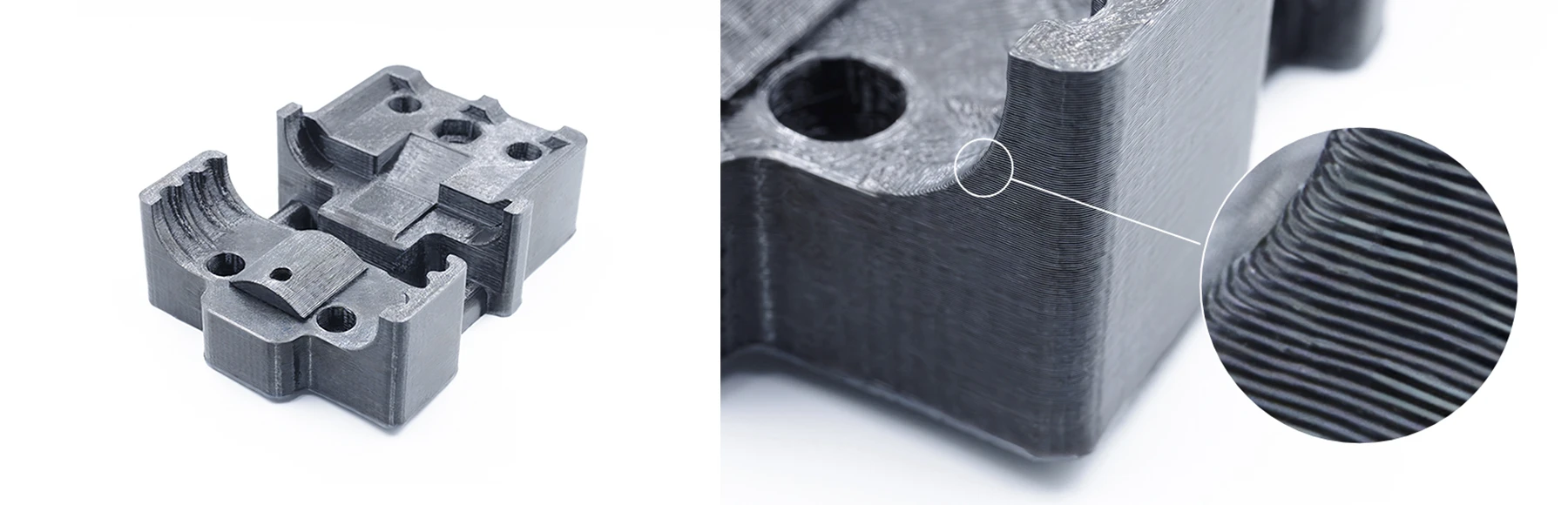
PPS-based functional part produced using high-temperature FDM printing. The images show the overall component geometry and a macro view of the surface, highlighting consistent layer formation and stable extrusion behavior. (WRYEDGE engineering photo)
PPS-CF is a composite material (carbon fiber-reinforced version of PPS). In 3D printing materials, carbon fiber content typically ranges from 10% to 30%, with higher concentrations providing increased stiffness and strength, but also making the material more abrasive and demanding to process. Compared to pure PPS, PPS-CF material offers:
However, these benefits come with trade-offs, including lower impact resistance and increased brittleness compared to modified PPS variants such as PPS-TF.
From a technical perspective, the main difference between PPS and PPS-CF is related to mechanical behavior. Both materials belong to the category of high-performance engineering filaments used in demanding industrial applications.
In other words:
Depending on additives and modifications, PPS can acquire different mechanical, thermal, or electrical properties. The most common variants used in 3D printing include:
This range of modifications allows PPS-based materials to cover a wide spectrum of engineering requirements.
Printing with PPS and PPS-CF requires high-performance hardware and precise process control. Due to high crystallinity and temperature sensitivity, stable printing conditions are critical for achieving good results.
The table below summarizes typical printing parameters for PPS and PPS-CF materials used in high-temperature FDM printing. These materials require significantly more controlled conditions compared to standard 3D printing filaments such as PLA or PETG.
| Parameter | Recommended values / notes |
|---|---|
| Nozzle temperature | 280–320 °C (depending on formulation and printer capability) |
| Bed temperature | 100–120 °C |
| Chamber | Enclosed or actively heated chamber recommended for stability |
| Nozzle type | Hardened steel or wear-resistant nozzle (required for PPS-CF) |
| Printing speed | 30–60 mm/s depending on part geometry |
| Cooling | Minimal or disabled to avoid layer separation |
| Drying | ~120 °C for 4–6 h before printing (recommended for stable results) |
| Build surface | PEI or high-temperature adhesive surface |
PPS is considered a low-hygroscopic material, meaning it absorbs very little moisture compared to materials like nylon. However, even small amounts of moisture can negatively affect print quality.
Moisture can cause:
For reliable results, drying is still recommended: typical drying conditions: ~120 °C for 4–6 hours. Proper material handling is essential to maintain consistent print quality.
The table below provides a practical overview of when to choose PPS or PPS-CF depending on application requirements. This comparison focuses on practical engineering use cases rather than purely theoretical properties.
| Property | PPS | PPS-CF |
|---|---|---|
| Stiffness | Moderate, balanced material behavior. | High stiffness due to carbon fiber reinforcement. |
| Mechanical strength | Good overall strength with stable performance. | Higher strength-to-weight ratio, more structural performance. |
| Impact resistance | Moderate, depending on formulation. | Lower than PPS, more brittle under impact. |
| Thermal resistance | Excellent, suitable for high-temperature environments. | Excellent, similar base polymer performance. |
| Chemical resistance | Excellent resistance to solvents, fuels, and acids. | Excellent, same PPS base properties. |
| Dimensional stability | Very high, low warping. | Very high, further improved by carbon fiber. |
| Electrical properties | Good electrical insulation. | Reduced insulation, may show slight conductivity. |
| Printability | Requires high-temperature setup and controlled environment. | More demanding due to abrasive fibers and higher rigidity. |
| Wear on hardware | Moderate. | High – hardened nozzle required. |
| Typical use | Chemical, electrical, and high-temperature applications. | Structural, load-bearing, and lightweight mechanical parts. |

Due to their combination of thermal, chemical, and mechanical properties, PPS-based materials are widely used in demanding engineering environments. Typical applications include high-temperature industrial components, parts exposed to aggressive chemicals, flame-retardant components, and precision parts where dimensional stability is critical.
PPS and PPS-CF are not interchangeable materials, as each serves a different engineering purpose. PPS is better suited for applications where chemical resistance, thermal stability, and electrical insulation are the priority. PPS-CF is the stronger choice when stiffness, structural performance, and load-bearing capability are more important. In practice, the right selection depends on whether the application prioritizes environmental resistance or mechanical reinforcement. Understanding these differences is essential when working with high-performance engineering filaments in demanding industrial applications.
9:00 – 18:00 val. darbo dienomis
Savaitgaliais – Dažniausiai dirbame
Turite klausimų, o gal reikalinga konsultacija apie 3D spausdinimo technologijas ir gamybą? Susisiekite!
Visada laukiame lankytojų – tik iš anksto suderinus!
© 2026 WRYEDGE | Visos teisės saugomos