3D FDM PRINTING
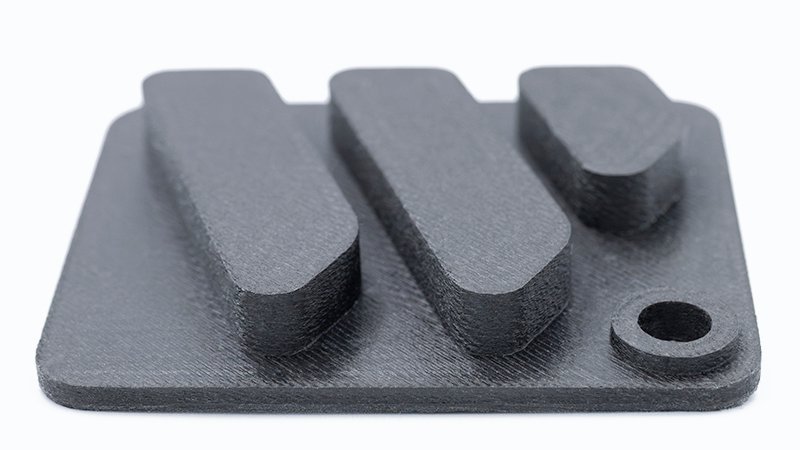
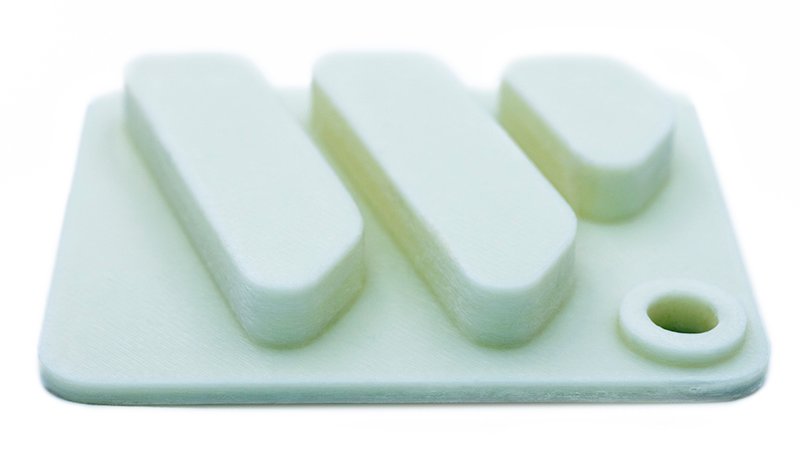
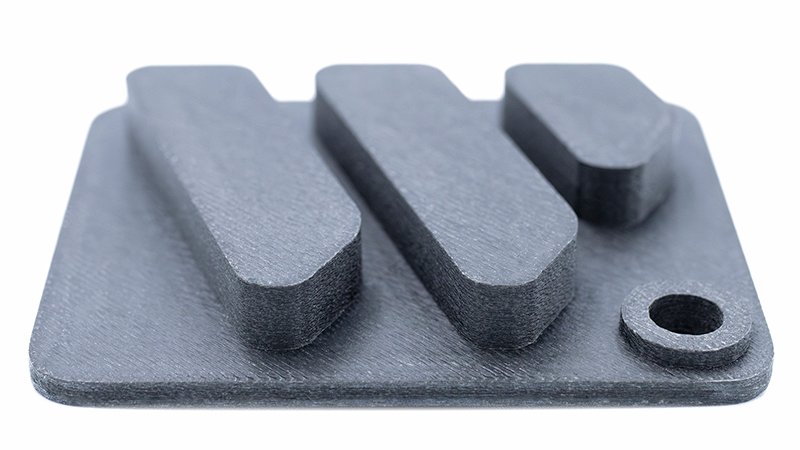
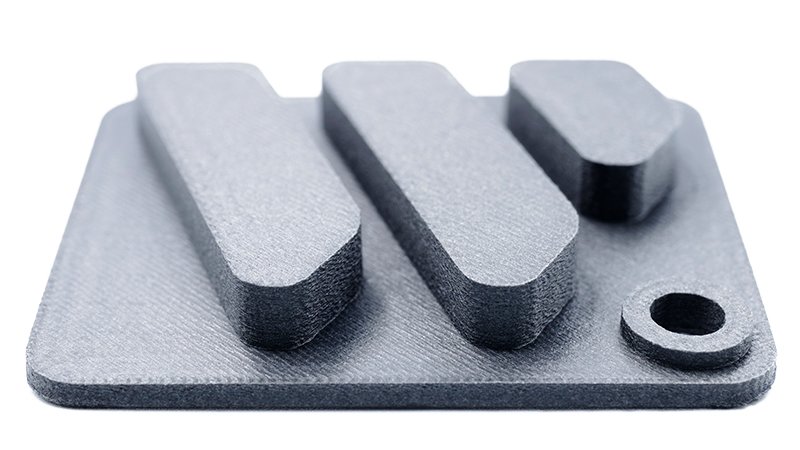
The 3D FDM (Fused Deposition Modeling) technology is one of the most popular and widely used 3D printing methods. This process utilizes thermoplastics (filaments), which are heated and extruded layer by layer onto the printing platform until the entire object is formed. During FDM 3D printing, various thermoplastics can be used — from standard plastics to engineering composites. This method allows for rapid and economical production of prototypes, functional models, and final-use parts.
WRYEDGE uses industrial-grade FDM 3D printing equipment capable of printing objects up to 600 × 600 × 600 mm in size. This opens possibilities to create not only small visual models but also large functional prototypes, architectural models, and detailed segmentation projects.
3D FDM technology advantages,benefits,pros
✅ FDM is one of the most affordable 3D printing technologies — both the equipment and consumables (filaments) are relatively inexpensive compared with other 3D printing methods.
✅ Low operating costs — no need for costly photopolymers or polymer powders as in some other 3D printing technologies.
✅ FDM enables printing with a broad range of thermoplastics — from common, low-cost, eco-friendly plastics to strong industrial composites.
✅ FDM printers typically offer larger build volumes than SLA or SLS systems — enabling single-piece parts of 1 meter and beyond.
✅ Printed parts are mechanically strong enough — ideal for rapid prototypes, brackets, enclosures, and other engineering components.
✅ Capable of producing functional prototypes.
✅ Easy to get started — even inexperienced users can achieve successful prints with minimal know-how.
✅ Large enthusiast community — abundant guides, tutorials, and active forums help solve virtually any issue.
✅ Modifiable and upgradable — printing profiles can be tuned, components added, and extruders swapped.
✅ Rapid prototypes and short-run batches — without expensive molds or casting processes.
✅ Quick design changes and iterations — critical when developing new products or testing parts before mass production.
✅ Suitable for one-offs and small-series production — make on demand without large upfront investments.
✅ Materials used in FDM can be recyclable or even biodegradable.
✅ Lower material waste — layer-by-layer printing uses only as much material as the part requires.
✅ Lower energy consumption — compared with other technologies, FDM typically uses less electricity than SLA or SLS.
3D FDM technology limitations, drawbacks,challenges
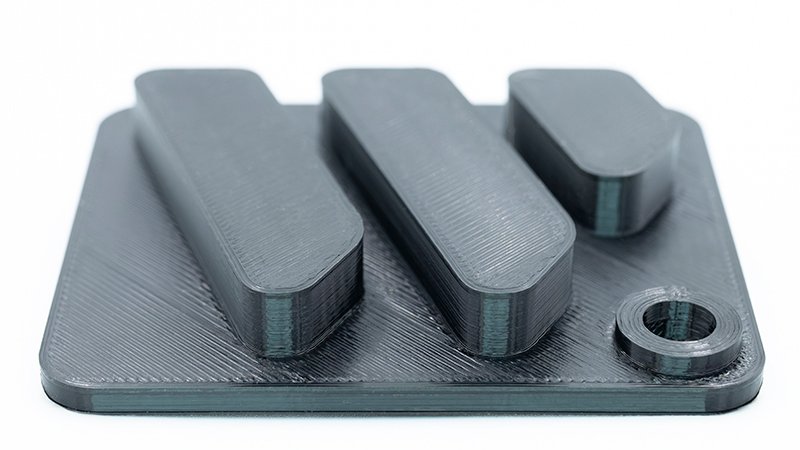
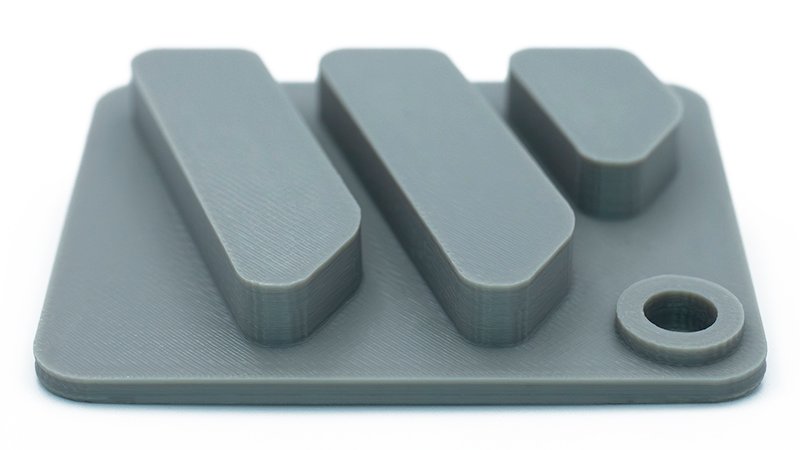
❌ Layer lines are clearly visible in FDM printing, so the surface is not perfectly smooth.
❌ Not all parts can be printed with very fine geometries as is possible with SLA or SLS.
❌ Additional post-processing (sanding, chemical smoothing, or painting) may be required to achieve an aesthetically pleasing finish.
❌ Interlayer adhesion – printed parts can be weaker at the layer interfaces, especially under loads oriented unfavorably to the print direction.
❌ Anisotropy of plastics – parts are not equally strong in all directions; loads perpendicular to the layer stacking are particularly critical.
❌ Incorrect print settings can cause voids/gaps between layers, reducing mechanical properties.
❌ FDM is not the fastest 3D printing method, especially when very high resolution and small layer heights are required.
❌ SLA and SLS can be more efficient for producing many small parts at once because they don’t rely on a single moving extruder.
❌ Large or complex prints can take hours or even days, depending on chosen layer height and speed.
❌ Some geometries cannot be printed without supports, especially with many overhangs or suspended features.
❌ Supports can leave unwanted surface marks, even after removal.
❌ Non-soluble supports must be removed mechanically, which can be challenging for fine details.
❌ Incorrect extruder temperatures can cause defects, for example:
• Over-extrusion – too much plastic, rough surfaces.
• Under-extrusion – too little plastic, brittle layers.
❌ ABS and some other plastics require an enclosed chamber to avoid layer separation (warping).
❌ Thermal expansion can cause dimensional changes, making parts less accurate.
❌ FDM is not the most precise technology – dimensional tolerance can be ±0.1 mm or higher.
❌ Larger parts may warp if not properly anchored to the build plate.
❌ Not all geometries print accurately, especially very thin walls or ultra-small features.
PLA — Easy to print, eco-friendly, and widely used material. Made from renewable plant-based sources, therefore biodegradable and environmentally friendly.
PLA-HS — Modified PLA with increased strength; easy to print, ideal for visual or non-demanding functional prototypes.
PLA-CF — PLA reinforced with carbon fiber; provides higher strength (stronger than PLA-HS), a matte surface, and excellent aesthetic quality.
ABS-HF — Low-warping, crack-resistant ABS optimized for fast 3D printing and large-size parts.
ASA — UV-resistant ABS alternative, suitable for products intended for outdoor use.
PETG-HF — Specially formulated PETG for fast 3D printing with increased strength and excellent layer adhesion.
TPU 75D — Flexible, rubber-like material designed for medical prototypes, tooling, and durable flexible parts.
TPU-HF 95A — Standard flexible, rubber-like material suitable for damping components.
ABS-CF20 — ABS with 20% carbon fiber; higher stiffness and lower weight.
ABS-GF25 — ABS with 25% glass fiber; improved impact and temperature resistance.
PA6-GF15 | PA6-GF25 — Nylon with 15% | 25% glass fiber; high mechanical and thermal resistance with low weight.
PA6-CF15 | PA6-CF25 — High-temperature polyamides with 15% | 25% carbon fiber; strong and lightweight.
PA12-CF15 — Nylon with 15% carbon fiber; high mechanical durability at low weight.
PET-CF15 — PET with 15% carbon fiber; rigid and moisture-resistant.
PET-GF15 — PET with 15% glass fiber; high chemical resistance.
S-Multi — Easily removable support material for dual-extruder 3D printers; compatible only with industrial filaments.
S-HTPA — Special, easy-to-remove support material for industrial HTPA-series filaments; ensures good bonding to the model while remaining easy to remove.
PVA — Water-soluble support material optimized for dual-extrusion 3D printing with standard PLA and PLA-HS.
Download the complete set of material technical specifications in one document!
This PDF contains a detailed comparison table with all key mechanical and physical parameters.
Have questions or want to receive material samples? Contact us — we’ll help you choose the most suitable option! You can read more about 3D FDM technology here.
Information
- Work hours
9:00 – 18:00 on work days
Weekends — usually working
Have questions or need a consultation about 3D printing technologies or production? Contact us!
- Visits
We always welcome visitors — just let us know in advance!
© 2025 WRYEDGE | All rights reserved